

cropper
update
Passion For Sports
update
The Coaches Corner
  • Home
  • Categories
    • Track and Field
    • Swimming
    • Wrestling
    • Gymnastics
  • Coaching Corner
August 12.2025
3 Minutes Read

Unstoppable Spirits: 26 New Records at USMS Summer Nationals Celebrate Swimming Excellence

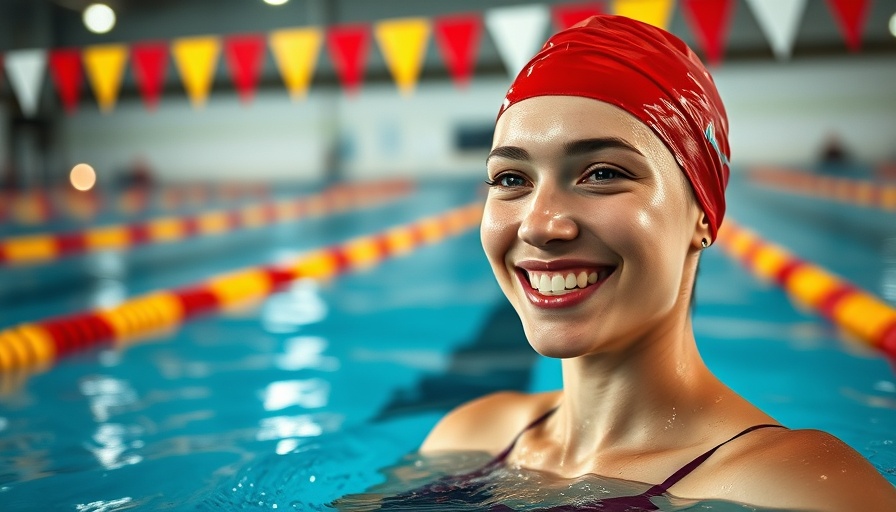
USMS Summer Nationals competitor smiling in pool.

Swimmers Shine at the USMS Summer Nationals

The 2025 U.S. Masters Swimming (USMS) Summer National Championship, which took place at the Weyerhaeuser King County Aquatic Center in Federal Way from August 6 to 10, showcased unparalleled talent and camaraderie among a diverse pool of athletes. With more than 1,100 competitors from five countries, this event marked the fifth USMS pool national championship held in Federal Way and the first since 2007.

A Historic Event with Record Breakers

The thrilling championship saw 26 new records shattered, highlighting the extraordinary capabilities of masters athletes who continue to defy age barriers. Notably, Frank Manheim, at 94 years old, stood out as the oldest competitor, illustrating that passion for swimming knows no age limit. The event also included four Olympians: Rick Colella, Francis Canales, Kurt Grote, and Dan Jorgensen, each bringing a wealth of experience and achievement to the pool.

Spotlight on Record-Breaking Performances

Across five exhilarating days, several swimmers etched their names in the annals of USMS history with impressive performances. Richard Baughman set the men’s 70-74 1500 freestyle record with a stunning time of 20:17.22, making it the AQUA Masters world record as well as the USMS record. Fans cheered as Charlotte Davis, competing in the 75-79 age bracket, claimed multiple records in the 50 and 400 freestyles, demonstrating her remarkable prowess in the water. Cecilia McClosky also made headlines by establishing the women’s 75-79 50 backstroke record at an astonishing 38.17 seconds, further contributing to the women’s dominance in this championship.

The Power of Community and Support

The enthusiasm at the championships reflected the robust community of masters swimming, where participants often cheer each other on, regardless of age or record held. This sense of belonging is not reflected in mere competition but also emphasizes the broader implications of sports in building connections among individuals. The stories of these remarkable athletes serve as an inspiration, reinforcing the importance of an active lifestyle. The diverse age ranges, from 94-year-old Frank Manheim to the formidable competitors in their 30s and 70s, exemplify the unity that characterizes masters swimming.

Future Trends in Masters Swimming

As the popularity of masters swimming continues to grow, it beckons the question—what’s next for this robust community? With record-breaking performances becoming a norm, aspiring swimmers might push the boundaries even further. Enhanced training techniques, nutritional advancements, and innovative competition formats can redefine goals in the years to come. USMS continues to evolve, with more international competitions likely on the horizon, offering greater opportunities for swimmers to make their mark.

What Age Means in Masters Swimming

Contrary to popular belief, age in masters sports should not be seen as a hindrance but rather as an asset. The presence of older athletes competing makes the sport more inclusive and provides younger swimmers with role models who demonstrate that athleticism does not wane through the years. As pronounced in the camaraderie at these championships, age and records become a bridge—not a barrier—bringing athletes together, fostering competition and mutual support.

Conclusion: Join the Movement

The USMS Summer Nationals remind us of the incredible potential within all athletes, regardless of age. Whether you’re a casual swimmer, a coach, or a proud parent cheering from the sidelines, the masters swimming community welcomes you to embark on your own swimming journey. With resilience and determination evident in these record-setting feats, there’s never been a better time to dive in and be a part of this vibrant community!

Swimming

6 Views

0 Comments

Write A Comment

*
*
Please complete the captcha to submit your comment.
Related Posts All Posts
07.07.2026

Leon Marchand and Maxime Grousset: The Future Stars of Swimming

Update Leon Marchand and Maxime Grousset: A Dynamic Duo on the Rise The anticipation is palpable as the French swimming community gears up for the European Championships in Paris. Among the 27 elite athletes selected for the national squad are Leon Marchand and Maxime Grousset, two swimmers who embody both talent and resilience. As the championships approach, fans eagerly await Marchand’s comeback from injury and Grousset’s return to racing following his fractured foot. Marchand's Unwavering Spirit Amidst Setbacks Marchand’s recent performance at the French Championships was nothing short of remarkable, clocking in at 4:04.56 in the 400 IM, making it the fifth-fastest time ever recorded. However, his journey has been bittersweet. A sharp pain during the prelims of the 200 breaststroke has raised alarms about a possible injury, leading to his withdrawal from subsequent events. Despite this setback, the French federation has granted him the freedom to compete in other events as long as he meets the qualifying standards. This speaks volumes about Marchand's importance to the team and his earning of a second chance, which reflects the intense pressure elite swimmers face. Grousset's Road to Recovery: Overcoming Adversity Maxime Grousset, who recently suffered a fracture in his left foot, also demonstrates the tenacity required of competitive athletes. Even though he had to withdraw from the French Championships, a medical exemption has cleared the path for him to compete in the European Championships. His ability to overcome significant injuries illustrates a vital lesson in resilience for aspiring athletes and fans alike. Young Stars Emerge: A New Generation of Swimmers The pair's inclusion is a testament to the youthful vigor present in the French swimming scene. Young talents such as Yohann Ndoye Brouard and Mary-Ambre Moluh are also making waves. Brouard recently showcased his prowess by sweeping the backstroke events, while Moluh shattered French records in the 50 and 100 back, positioning herself at the top of Europe. Their performances reflect a pivotal shift in French swimming, indicating that a new generation of athletes is set to dominate. The Importance of Home Advantage Hosting the European Championships grants France a unique edge. Competitors often feed off the energy of their homeland crowds, and it can enhance performance under pressure. Fans should expect nothing less than an electric atmosphere at the La Defense Arena, where the athletes will compete not just for medals but also pride in their country. What This Means for the Future The selections of Marchand and Grousset for the European Championships mark more than just individual milestones—they signify a cornerstone for French swimming as a whole. With Paris 2024 on the horizon, their participation in this prestigious event will be crucial in building momentum leading up to the Olympics. Both swimmers have the potential to be game-changers, inspiring future generations. Encouraging Young Aspiring Athletes For young athletes and enthusiasts, the story of Marchand and Grousset serves a deeper message: resilience and determination can lead to spectacular achievements. As they face their challenges head-on, they remind us that success doesn’t come without its hurdles—it's about how you choose to respond to those setbacks. This spirit is what builds champions, both in and out of the pool. As the European Championships take place from August 10-16, all eyes will be on the French squad and their quest for glory. Will Marchand bounce back with a magnificent performance? Can Grousset compete at a high level despite a tough recovery process? The answers lie just around the corner. Keep your swimsuits ready, because French swimming is on the rise—and it's set to make a splash on the European stage!

07.06.2026

What Summer McIntosh's Record Means For Women's Super-Suit Standards

Update Summer McIntosh's Record-Breaking AchievementOn a momentous day for competitive swimming, Summer McIntosh, a rising star from Canada, shattered the longstanding record in the women’s 200-meter butterfly, previously held by Liu Zige since 2009. McIntosh's stunning performance at the Pan Pacific Championship trials in Montreal saw her swim an astonishing time of 2:01.65, an achievement that not only redefined her career but also signified the end of an era dominated by 'super suits' in women's swimming. As super suits have increasingly been scrutinized and regulated, this record represents a return to valuing pure skill and training over advanced technology.The End of Super Suits: A New Era in SwimmingThe 'super suit' phenomenon gripped the swimming world in the late 2000s, where athletes were adorned in advanced poly-coated swimsuits that offered efficiencies in drag and buoyancy, leading to an unprecedented number of shattered records. However, these suits raised ethical debates on fairness in competition. With FINA's decisive action in 2010 to impose strict regulations eliminating such swimsuits, the swimming community began a transition back towards traditional textile suits designed for competitive fairness. This change prompted a pivotal shift, outlining the parameters within which swimwear could operate but did not stifle innovation.The Historical Significance of McIntosh's RecordMcIntosh's record is pivotal not merely for its numerical value but for what it represents in a sport recovering from a technology-driven past. Throughout recent years, athletes like McIntosh have been pushing their limits, moving towards a space where human talent and dedication take precedence once again. It's fascinating to reflect on how swimming's governing bodies took proactive measures to ensure that talent, not technology, remains the focal point of competition.Swimwear Evolution: From Super Suits to Textile InnovationPost-ban, manufacturers have pivoted to innovate within the confines of the new regulations. The switch to textile suits did not extinguish the race for better performance; instead, it ignited creativity leading to the development of materials focusing on muscle compression, fit, and hydrodynamics. For example, suits have evolved to incorporate carbon fibers for durability while adhering to buoyancy regulations, making performance enhancements possible without a return to buoyant suits.The Role of Regulations in Swimwear for Fair CompetitionUnderstanding that competitive swimming is fundamentally about the athlete’s prowess, governing bodies like FINA have crafted regulations specifically to maintain fairness and safety. These rules prevent any technological advancements from overshadowing the athletes’ skills, allowing an equitable competition landscape. Athletes of various ages, including young swimmers, benefit from these regulations, as they emphasize developing their skills over relying on costly swimwear technology.Future Predictions: What's Next for Swimwear?As this new chapter of swimwear technology continues to unfold, we can anticipate consistent progress—both in fabric technology and performance optimization. The swimming community will continue to witness advancements aimed at improving comfort and efficiency while remaining within the boundaries set by international regulators. With the emergence of materials that adapt to an athlete's movements, the next era of swimsuit design could very well focus on how to integrate human performance with innovative textile engineering, preserving the integrity of the sport.Conclusion: Embracing Change in Competitive SwimmingAs Summer McIntosh embarks on what promises to be a stellar career, her record symbolizes more than just an impressive time—it is a statement about the future of competitive swimming. McIntosh's victory invites all athletes, coaches, and fans to reflect on how far the sport has come and the exciting path ahead that prioritizes skill and dedication over technological advantages. For enthusiasts and aspiring competitors alike, the evolution of swimming—and now swimwear—offers a renewed hope for a sport rooted in hard work and passion. It’s time to cheer for our swimmers and honor our dedication to sporting integrity.

07.05.2026

Marrit Steenbergen Nears World Record in 100 Freestyle at Dutch Champs

Update Marrit Steenbergen: The Rising Queen of Freestyle The Dutch Championships showcased Marrit Steenbergen's extraordinary talent as she narrowly missed her world record in the 100-meter freestyle, clocking a blistering 51.82 seconds. This performance not only solidifies her position as the top female sprinter in history with multiple sub-52 second swims but also highlights her relentless pursuit of excellence. Coming off a historic world record, her performance at the championships further establishes her dominance in the sport, making her a key contender for the upcoming European Championships. From World Champion to Historic Contender Steenbergen's journey is a testament to her hard work and dedication. With her recent victory at the Dutch Champs, where she also excelled in the backstroke events, her versatility is commendable. As the reigning world champion, having claimed gold in both 2024 and 2025, she is expected to continue her winning streak in Paris next month. Her current efforts place her behind only Sarah Sjöström's world record of 51.71, setting the stage for a riveting competition that could see records tumble. Competitive Landscape: Niewold and the Next Generation Alongside Steenbergen, Sean Niewold is making waves in the swimming world. His recent personal best of 47.97 seconds in the 100-meter freestyle earned him a national title, placing him high in Dutch swimming history. Niewold's impressive time puts him behind only Olympic icon Pieter van den Hoogenband. His rising star shines a spotlight on the depth of talent emerging from the Netherlands, setting the stage for future Olympic meets. The Legacy of Dutch Sprinting Dutch swimming boasts a rich history, producing legends like Inge de Bruijn and Ranomi Kromowidjojo. Steenbergen stands as a continuation of this legacy, illustrating how the Netherlands has consistently nurtured swimmers capable of competing at the highest levels. With the anticipation of the upcoming LA 2028 Games, Steenbergen and Niewold represent a bright future for Dutch swimming, rooted in tradition yet fueled by modern innovation. Why These Titles Matter Victories in competitions like the Dutch Championships serve a dual purpose: they reinforce athlete confidence and showcase the breadth of talent across international waters. For fans and aspiring swimmers, these victories inspire the next generation to chase greatness. Additionally, they emphasize the importance of national competitions in fostering a competitive spirit that is essential for success on international stages. Steenbergen’s Pursuit of Olympic Glory Despite her impressive medal tally, one major accolade has eluded Steenbergen: an Olympic gold. As she approaches her next Olympic trials, the pressure to claim this title amplifies, making her performances even more significant. The right mental and physical preparation could position her to join the ranks of Olympic champions, a goal that not only serves her legacy but also enhances interest in the sport. What This Means for Swimming Enthusiasts The results from the Dutch Championships are a reminder of the excitement swimming brings to athletes and fans alike. As records are challenged, and new talents emerge, the thrill of competition pushes everyone to improve—athletes, coaches, and fans. For those following the sport, it’s an opportunity to witness history in the making.

Terms of Service

Privacy Policy

Core Modal Title

Sorry, no results found

You Might Find These Articles Interesting

T
Please Check Your Email
We Will Be Following Up Shortly
*
*
*
